Waterproofing Match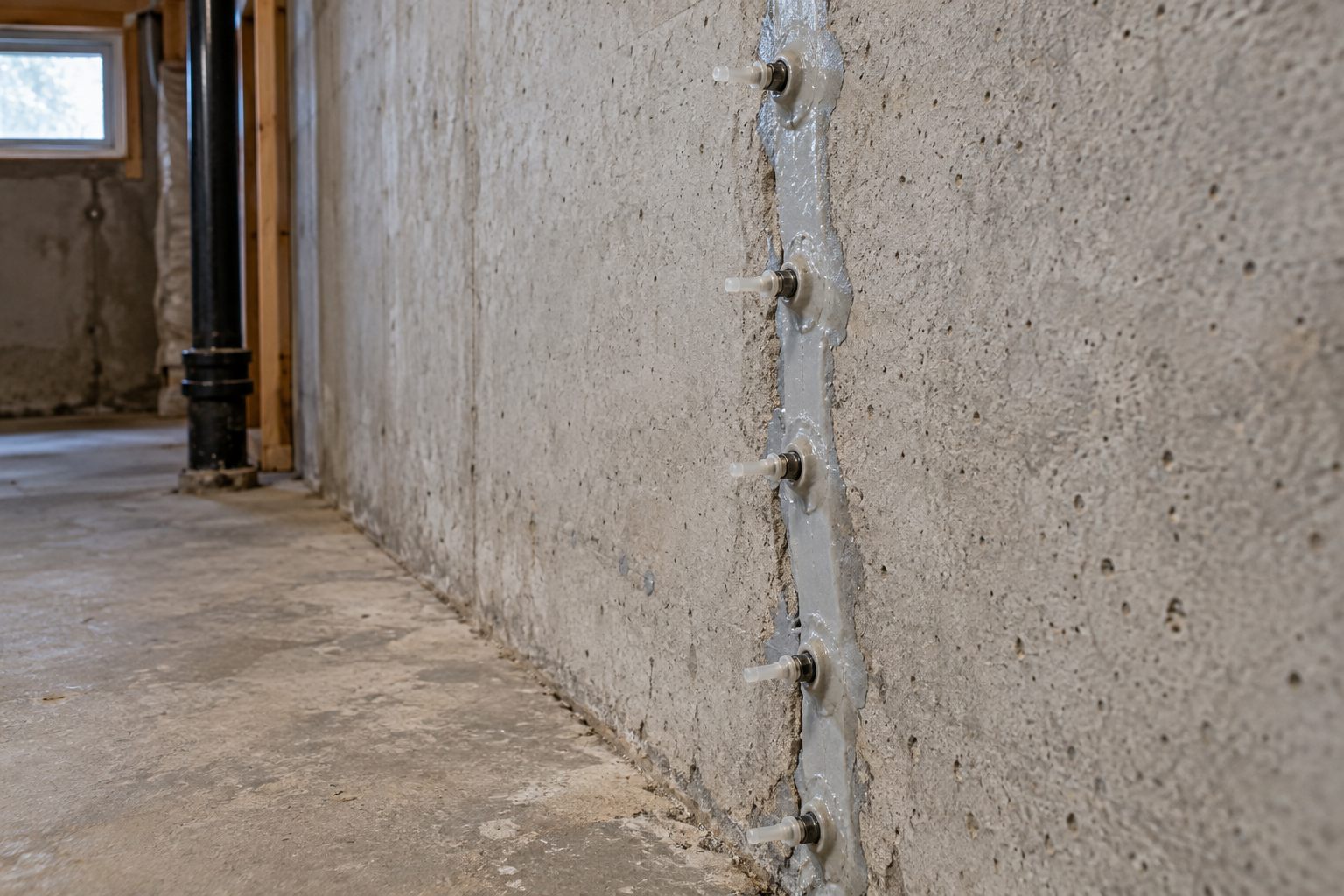
Leaking cracks are usually a straightforward fix
Most poured concrete walls develop small cracks as they cure. They aren't always a structural concern, but they're a common path for water. Contractors typically seal them by injecting the crack with polyurethane or epoxy from the inside, which fills it through the full thickness of the wall.
When it's more than a leak
Cracks that are wide, growing, stair-stepped in a block wall, or paired with a wall that's bowing inward can mean the wall is moving. Tell the contractor if you see any of these so they can check for structural issues before sealing.
Before you call
Measure or photograph the crack, note whether it leaks every rain or only in heavy storms, and mention if anyone has tried to patch it before.
Before you choose a contractor
Confirm that the proposed work addresses the observed source of moisture. Ask about inspection fees, permits, exclusions, cleanup, discharge routing and warranty terms. Verify applicable credentials and insurance independently.
Use the waterproofing estimate checklist to compare the same scope across quotes.